
THE NURAVYN JOURNAL · NICU DISCHARGE
Caring for a Medically Complex Baby at Home After NICU Discharge
Bringing a medically complex baby home after a NICU stay is a major milestone. It can also feel overwhelming. Families may leave the hospital with new routines, equipment, feeding plans, medication schedules, specialist appointments, and a long list of instructions to carry out on their own.
This guide offers general educational information for families and healthcare partners supporting a complex NICU discharge. It is not a substitute for the individualized discharge plan created by the baby’s medical team. Families should always follow their clinical team’s specific instructions.
What “Medically Complex” Can Mean After NICU Discharge
A medically complex NICU graduate may have ongoing needs related to prematurity, feeding, breathing, growth, medications, developmental follow-up, surgical recovery, congenital conditions, neurologic concerns, or other health challenges. Some babies go home with several of these needs at once.
No two NICU discharge plans are exactly the same. The most important home-care foundation is clarity: families need to know what is expected each day, what changes should be watched closely, who to contact with concerns, and when to seek emergency help.
Start With a Written Home Care Plan
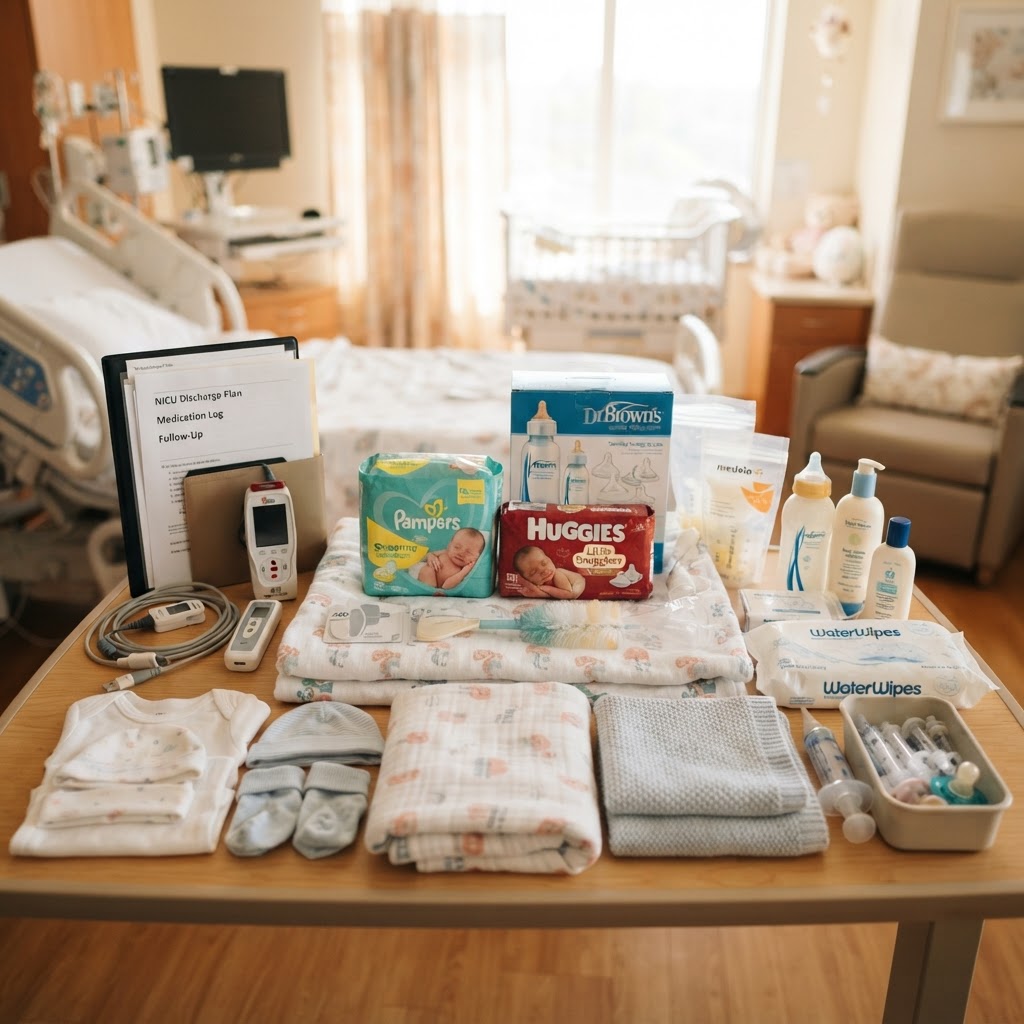
A written care plan can help families turn hospital instructions into a workable home routine. It may include feeding instructions, medication names and timing, equipment guidance, emergency contacts, follow-up appointments, weight checks, therapy referrals, and more.
- Daily routine: Feeding times, medication times, monitoring needs, and rest periods.
- Contact list: Pediatrician, specialists, home health agency, pharmacy, equipment company, and emergency contacts.
- Appointment tracker: Follow-up visits, labs, imaging, therapies, and developmental services.
- Symptom guidance: Specific signs the medical team wants the family to watch for.
- Backup plans: What to do if equipment fails, supplies run low, transportation falls through, or symptoms change.
Medication Safety at Home
Many complex NICU graduates go home with one or more medications. Families should understand the medication name, dose, timing, route, purpose, storage instructions, refill process, and what to do if a dose is missed. Measuring tools should match the instructions exactly.
Helpful medication habits include using a written schedule, setting alarms, keeping medications in a consistent safe location, documenting doses after they are given, and asking the pharmacist or clinician to review any confusing instructions. Families should never hesitate to ask questions before leaving the hospital — or after they get home.
Feeding and Growth Support
Feeding is often one of the biggest adjustments after NICU discharge. Some babies breastfeed, bottle-feed, receive fortified milk or formula, use a feeding tube, or follow a specialized plan from the NICU team. Families may be asked to monitor intake, wet diapers, weight trends, or specific feeding behaviors.
Parents and caregivers should know what a typical feed looks like for their baby, how long feeds should take, what signs may mean the baby needs a break, and when to call for guidance. Feeding concerns are common and should be addressed early, especially when growth is being monitored closely.
Equipment, Supplies, and Backup Planning
Some families go home with medical equipment such as oxygen, monitors, feeding pumps, suction supplies, or other devices. Before discharge, families should receive hands-on teaching, written instructions, troubleshooting guidance, and emergency planning.
At home, it can help to keep supplies organized in one area, track inventory before items run out, and create a backup plan for power outages, travel, or equipment issues. Families should follow their care team’s instructions for cleaning, maintenance, and when to replace supplies.
Knowing When to Call for Help
Families should leave the hospital with clear instructions for who to call and what symptoms need urgent attention. Warning signs vary depending on the baby’s condition, so individualized instructions matter. In general, caregivers should seek immediate help for breathing difficulties, color changes, feeding intolerance that worsens, fever, or anything else the care team has flagged as urgent.
It is better for families to ask for help early than to wait when something does not feel right. Healthcare teams can support safer transitions by making escalation instructions simple, specific, and easy to find.
Follow-Up Care and Care Coordination
Complex NICU discharge often includes several follow-up visits. These may involve a pediatrician, neonatology follow-up clinic, cardiology, pulmonology, gastroenterology, neurology, surgery, nutrition, therapy services, early intervention, home health, or other services.
Families may benefit from bringing a notebook or digital list of questions to each visit. Helpful questions can include: What should we watch for this week? Are feeding or medication changes needed? When is the next follow-up? Who should we call after hours? A simple system for tracking appointments, instructions, and questions can reduce stress and improve coordination.
Caregiver Well-Being Matters Too
Caring for a medically complex baby can be physically and emotionally demanding. Parents may feel grateful to be home while also feeling anxious, exhausted, or isolated. Caregiver well-being is part of the home-care picture because families need rest, support, and realistic expectations to sustain care over time.
Support may come from trusted family members, friends, peer groups, social workers, home health teams, faith communities, mental health professionals, or community programs. Families should be encouraged to ask for practical help, take breaks when possible, and share how they are truly doing.
How Healthcare Partners Can Strengthen the Home Transition
Healthcare partners can improve the NICU-to-home experience by making education consistent, accessible, and practical. A strong discharge support process gives families repeated opportunities to practice skills, confirm understanding, ask questions, and connect with resources.
- Use plain language and teach-back for important instructions.
- Provide one clear care plan families can reference at home.
- Coordinate handoffs between inpatient and outpatient teams.
- Prepare families for common first-week questions and concerns.
- Include emotional support and resource navigation as part of discharge readiness.
A Calmer Transition Starts With Clearer Support
Home care for a complex NICU graduate is not just about completing tasks. It is about helping families feel prepared, informed, and connected as they continue caring for their baby beyond the hospital. With clear education, coordinated follow-up, and compassionate support, the transition can feel less overwhelming.
Nuravyn focuses on the discharge journey between NICU care and life at home, helping healthcare partners and families better understand what support can look like during this important transition.
Important: This article is educational only and does not replace medical advice. Families should follow their baby’s individualized discharge instructions and contact their healthcare team with questions or concerns.